Rhythm Research Class
-
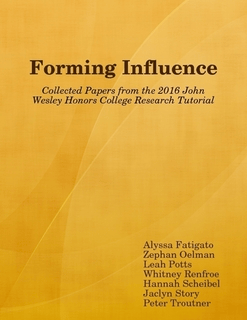
Foreword to Research Tutorial Students’ Self-Published Essays
The book, titled Forming Influence: Collected Papers from the 2016 John Wesley Honors College Research Tutorial,…
-

Module 4, Class 4: Smartphones are not objects, they’re patterns
Whoever or whatever controls our rhythms, controls society. One big contender seems to be the smartphone.…
-
Module 3, Class 3: Rhythm and Interpersonal Communication (with particular reference to ASD)
The role of rhythm to create connections with non-verbal individuals with Autism Spectrum Disorder reveals something…
-
Module 3, Class 2: Strategic Deployments of Rhythm for Social Change
Rhythm is used as a tool of social change both in its capacity to hold people…
-
Module 3, Class 1: Rhythm: Holding People Together, Keeping People Apart
The roles of rhythm in communal identity-formation are complex. Take as an example its role in…
-

Module 2, Class 4: Is Rhythm the Same as Rote?
Why do rote rituals appear to be ineffective against depression? Does this mean rhythm is irrelevant?
-
Module 2, Class 3: Acedia and Monastic Rhythms
As it happens, St Benedict attempted to curb something very much like depression through the application…
-
Module 2, Class 2: Rhythm, Rumination, and Habit Formation
When we attempt to change our rhythms, whether rhythms of rumination or habit formation, what is…
-
Module 2, Class 1: Julia Kristeva and the Rhythms of Depression
An introduction to Julia Kristeva’s analysis of the role of rhythm and language in depression.
-

Module 1, Class 4: Flow and the Christian Experience of Time
Does Mihály Csíkszentmihályi’s research on flow have anything to do with the Christian’s experience of time…

